Norges musikkhøgskole Norwegian Academy of Music Search

Eva Beneke: Visibility is part of the work

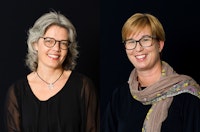
Photo: Stefan Maria Rother 2026

“You don’t even know how important it is for me to have you as a teacher,” a student told Eva not long ago. “Because you are a woman”.

– I have to do it, you know, says Eva Beneke.

She is a classical guitarist, and Associate Professor at Musikkhøgskolen since 2018.

With the experience of a performer, a teacher and an artistic researcher, her career has taken her across the world, working with music in both artistic, pedagogical and academic ways.

Originally from Berlin, she has built a career that crosses continents, institutions and genres: competitions won, albums released, a Doctorate of Musical Arts from the University of Southern California, and performances with chamber and symphony orchestras and pop artists alike.

But the statement above does not come from someone who has arrived easily.

It is the statement of someone whose storyline is not ambition, but navigation – learning, repeatedly, to find a route through a field that wasn’t easy to envision when she first started out.

The guitar collection

– Music was very important to my family, says Eva.

Growing up in East Berlin, music was everywhere in her childhood home. Though not in a professional sense.

Her father collected guitars, her grandfather and uncle played. Birthdays and celebrations meant songs with seventeen verses, the whole family gathered around instruments, no audience required.

More than anything, music was a social activity. Something to gather around and have fun with across generations.

– This has been very influential for my relationship to music, which is very much like “sing and go, just play”, says Eva.

Eva's uncle and grandfather in action. Photo: private

…and a tiny, red piano

Despite all the guitars in the family home, and although she did become a professional guitarist in the end, young Eva really wanted to play the piano.

However, full-size instruments were not easy to come about in East-Berlin. Her first instrument, at three years old, was a little, red toy piano.

– I loved the piano, I thought it was so cool. We got one eventually, but by then it was too late to become a pianist, she says.

Eventually, she picked up the guitar and got into it quite quickly.

– I wanted to play harmonies and accompany myself singing, so after piano the guitar was the second-best thing.

Eva with her first instrument. Photo: Private

Becoming a guitarist

Her father was delighted. He loved classical guitar and, took his daughter to her very first concert around the age of eight, with Maria Isabel Sievers.

– At the time, I did not know that she was one of the very few women who had an international career as a classical concert guitarist, Eva explains.

She had already started taking guitar lessons and theory lessons herself, at a public music school.

According to Eva this was typical for children in the GDR; almost everyone participated in some kind of organised activity, whether it was music or sports or science, or something else.

– It was a common thing to do, almost everyone learned to play an instrument. Lessons were accessible because it was affordable for most people in East Germany, she says.

Speaking of East Germany; things as she knew them were about to change, due to some rather impactful events.

Children of the change

9. November 1989 marked the beginning of the end of Germany’s 40 years of separation: The fall of the Berlin Wall, the collapse of the GDR, and the subsequent reunification.

It was a time of optimism, celebration, and of families reuniting after decades apart. But also, at least for the people of East Germany, a feeling that the world they knew was turned upside down.

– Life changed completely, says Eva.

– My parent’s generation got very busy trying to understand this new state, and how capitalism worked.

On the brink of adolescence, she herself mostly saw this new world as something exciting, with new opportunities opening in every direction. And with a freedom to discover it all undisturbed.

In Germany, this generation of kids is called “Wendekinder” – the children of the change.

– We were pre-teens, and we had to figure everything out for ourselves because our parents also had to figure everything out. It was kind of crucial for how we looked at everything, also music, Eva describes.

Singing with her father. Photo: private

The tribe

Her guitar training was classical. But at age 13 she and a group of friends started a band, where they played everything but classical music.

This opened a whole new dimension of possibilities on their respective instruments.

– It was like a playground of musical experience, Eva describes.

– I knew you could play the lute suites by Bach, but I did not know how to do all the other things, too. I remember we did a Phil Collins song, me with my classical technique. And the teacher went “oh, but you can play electric guitar instead.”

In addition to cover-songs, they started writing and performing their own music, with Eva combining the guitar, songwriting and singing back-up vocals.

– It is funny that I became a classical guitarist after all, because writing and singing is so natural for a guitar player. It was freeing, she says.

The teacher, meanwhile, provided them with the tools and assistance they needed, then left them alone to do their thing.

– We were like “just go and come back later, this is ours.” We practiced at the music school in the beginning, but then we moved to a practice room of our own.

– It was great to have a group of friends like that. They were my tribe, she says.

On stage at the Pionierpalast, singing with a choir. Photo: private

The Holy Grail

During the volatile times that was the mid- to late 90s, the band and their escapades (Eva’s own words) became an important constant.

The band made their own rules and helped each other make sense of everything that was going on.

– We explained the world to each other, a little bit. And it was something we did on our own; our parents had no time for any of it, she explains.

– Did you realise already then that you wanted to pursue music?

– Yes. We were all very serious, pushing each other and hyping each other up, like “have you listened to this? I found this record; check out Glen Gould, it is the Holy Grail!” I think that was more influential than any teacher.

Even though Eva´s parents were not professional musicians, she had no lack of musical role models.

One of her bandmates grew up in a family of pianists, another was the daughter of two opera singers. Then came the teachers and other adults in their sphere.

– I had this realisation that you could actually be a musician. And then you start seeing yourself in that.

Practicing at 15/16 years old. Photo: private

– That was my life

The band kept going through its member’s teenage years.

In parallel with regular high school, Eva attended a talent programme where chamber music and band rehearsals became part of the ensemble training.

Then there were guitar lessons, music theory and ear training, and piano as a second instrument.

– That was my life, she sums up.

Music was taking up more of her time than ever, and not only through chamber music and the classical guitar. But also through a never-ending desire to discover new music, for which a reunited Berlin offered endless opportunity.

– I saw a Björk concert during high-school, Eva remembers.

– She was not even that famous yet, she played at a smaller club with her band, and I thought “that’s amazing! Who is this?”

Playing the prize-winner ceremony at the “Chitarissima” competition in Saluzzo, Italy.

Crossroads

Finishing school, Eva’s way forward was already decided: Higher music education.

She decided to stay in Berlin for a four-year degree in music pedagogy.

– I loved it, she states.

– Academically it was very solid, amazing lecturers, amazing professors. I felt like I could learn everything there, all my questions answered.

Even though she had been doing music so intensely for many years, together with a fantastic group of friends, it felt different to have music as a main occupation.

– I wanted to be in this music world, which I already had with my friends, but now I felt like I was officially part of it, Eva explains.

At an early stage, encouraged by one of the professors, she even considered double majoring in choir conducting as well as guitar pedagogy.

– This professor was amazing, a role model for me, and I learned so much from her. I considered doing both, but it felt overwhelming for me at 19.

In the end, she decided to focus on the pedagogy.

– I thought “no, I need to practice guitar, I need to write good papers, and I need to get a job.” I did not take the risk, she says.

– But hey, woulda coulda shoulda. You never know, right? It is not something I grieve over.

Emerging from the rocks

A student of music pedagogy, Eva had already been teaching in music school for a while.

– I had started teaching early on, but musically it was a dead end. Not because teaching is a dead end, but because I knew I needed more.

It was time to take risks.

Having graduated from the UdK in Berlin, she was accepted to the Franz Liszt Hochschule in Weimar for a solo artist diploma, or Konzertexamen, with Professor Thomas Müller-Pering.

One of the biggest guitar programmes in Europe, with more than 30 students in the guitar class, it was both eye-opening and breathtaking.

– “Under what rock have I been living,” Eva quotes herself from that time.

– There were a lot of guitarists, many of them very young, very ambitious, competition winners. Scary good. I had to catch up.

Catching up, however, was not only a matter of hard work and practicing. For someone who for several years had seen herself mainly as a guitar teacher, changing her mindset into that of a soloist was a process.

– It was a personality development for me, Eva explains.

– Before, I did not really see myself as a concert guitarist. I was just curious about everything music, including teaching, conducting, repertoire, writing, a little singing, the social aspect… Now, I was ready to focus solely on the guitar.

Give it a shot

Looking back, she is glad she had the courage to take a leap.

– I think it is good to take a risk; you should do that when you are 18-19. I wish somebody had told me: Just give it a shot, you can’t go wrong!

Had she realised that before, it may have taken her in a different direction, musically and personally, at an earlier stage.

But, she points out, to do that you need to have a certain vision of yourself, and the freedom to think “I am just going to try!”

– It was something I just did not see for myself, and there weren´t many female role models. And since I did not get much advice on these things, I just had to make a decision, Eva says.

– Risk taking was not my forte back then, but I made it my forte, she concludes.

Photo: Stefan Maria Rother

Guitar and more guitar

Eva describes life at the Franz Liszt Hochschule with three words: guitar, guitar, guitar.

– I wanted to catch up, so I studied, participated in competitions, and I practiced eight hours a day for a long time, she says.

With so many fellow guitar students around she truly discovered the joy of chamber music, being able to play all sorts of duos, trios and quartets.

And she had a professor who knew exactly what she needed to keep progressing.

– For instance, he would tell me to pick a Bach fugue to work with, and when I asked which one he said: “there are five”. I asked which transcription, and he said: “make your own!”

Sheet music for classical guitarists is often based on transcriptions made for the lute, Eva explains. You either find a copy that has already been made and figure out the fingerings, or you make your own transcription.

– It was out of this world challenging for me, and it was just what I needed at that moment.

Roundabout

Four years and a solo artist diploma later, Eva felt well equipped to enter the professional world as a guitarist. Artistically, at least.

But as an entrepreneur, a self-employed musician looking for jobs, she had not learned where to start. How could she put herself out there? What was the next step?

With the guitar she did not have the same opportunities as singers, pianists and string players, who could aim for jobs at the operas and orchestras.

– Either you make your own path, or you don’t, she explains.

Again, she missed the network, a mentor, family members to learn from. She recalls asking an older guitarist how he made it as a young musician.

– He told me he had won this competition in 1982, and after that he could not remember having to ask anyone for anything. That was sobering.

Then a rare but defining opportunity came along, sent her way by a female guitar professor who had to decline a job at a festival. In Peru.

A dream and an answer

– It did not pay very well, and it cost about 500 euros to get there, Eva remembers.

– But she asked me if I wanted to do it and I said yes. I got some funding for the flight, I went there, played, and it was like a dream.

Among the other artists was none other than Martha Masters – winner of the GFA International Competition in 2000, and at the time Executive Director of the Guitar Foundation of America (GFA).

Eva took the opportunity to ask her the same questions she had asked others before. And this time she got some pretty useful answers.

– She advised me to go to LA for a doctorate, like she had done herself, to get an assistantship and teach in higher music education. That’s how you get the necessary experience and get into the industry, Martha explained, says Eva.

And having learned from previous experience, the young guitarist decided to jump at once.

– This is on me

Returning from Peru she started the process of applying. But:

– I encountered a few no-sayers, she says.

The reason, Eva believes, was a GDR mindset that still had a hold on some people in Eastern Germany by the mid-2000s.

That may be why some administrators and exchange organisations seemed sceptical. Going to America for a guitar doctorate; wouldn’t that be very difficult?

– It made me realise that this is on me. I have to figure it out, and I will figure it out.

Another obstacle was the 50 000 dollars that US authorities required applicants to have on their account; to prove they had the financial means to support themselves for one year without a job.

– Which I did not have, of course. But I had many supportive friends, and one who said, “I’ll transfer the $50 000 to you, you just transfer them back next week,” Eva explains.

Graduation picture from LA. Photo: private

Doing business

It was August 2007 when she came to the University of Southern California (USC) in Los Angeles.

And despite what she had been told back home she did get a scholarship for her doctorate, she was offered teaching positions, and she found her way into the industry.

– It was great, I loved all the academic subjects, the art. My expectations were not high, I was just very open and said yes to everything, says Eva.

She met a thriving and professional music industry, offering everything from pop gigs to orchestra jobs. At least as soon as you learned to master the most crucial skill of all: networking.

– It is a very extraverted culture. You need to be ready to shake hands and present yourself, and I hadn´t learned how. I can fake being an extrovert, but I am not.

German culture is not exactly known for extensive small talk. From what Eva was used to, you either had a deep and meaningful conversation, or you did not really speak much at all.

– I made so many mistakes, she says, laughing.

– People would ask “how are you doing” and I would give them my life story. Or they would be like “OK, I’m walking away from this mute girl”.

New responsibilities

She learned. In 2012, around the time she was completing her doctorate, she was asked to bring the guitar to a dinner party with friends.

– My first thought was “do I have to? It’s a holiday.” But I quickly said yes.

Everyone listened to Eva play a Bach Cello-suite. Including one guest who happened to be the president of McNally Smith College of Music in St. Paul, Minnesota.

A school for popular music, they were now looking to implement a classical branch. And guitar is just the instrument that could bridge the genres.

It started with Eva offering one masterclass. Then she was offered a full-time position.

– It was a very cool opportunity; it’s not like the students hadn’t ever heard classical guitar. My work there was basically uniting the different styles, Eva says.

She stayed in St. Paul for four years, building the programme, teaching bachelor and master students, and running a concert series.

With the guitar class at McNally Smith College of Music.

Off to Musikkhøgskolen

By December 2017, the time had come to wrap up her life in America and move back to Europe.

She knew she wanted to continue working in higher music education, and since the fall of 2018 she has been employed at Norges musikkhøgskole, splitting her time between Oslo and Berlin.

– It is absolutely my dream, she says.

– I have always loved teaching; I think it is such an enourmous privilege to work with young musicians who want to learn and are motivated, and to see the transformation after four to six years.

On top of that, she gets to work on repertoire and play guitar.

– I mean, come on, she says, laughing.

Visibility

Being a professional guitarist, who also happens to be a woman, it is impossible to overlook the inequalities that come with gender.

Even though new generations of female guitarists are making themselves known, the scene is still very much a men’s club in Eva’s experience.

She refers to an Instagram account called “All the women were busy”. The account shares posters from guitar festivals where the percentage of female musicians is close to, or often at, zero.

– They post pretty regularly, with hilarious captions. But it is not funny. It really makes me angry.

She emphasizes that the music scene consists of more than festivals, so participation is not a goal in itself. But festivals are a substantial part of the industry for guitarists, great for networking and recruitment.

– Do you ever feel a responsibility to be visible, as a female guitarist?

– Absolutely. A student just told me, “You don’t even know how important it is for me to have you as a teacher, because you are a woman”. So I have to do it, you know.

The student’s words have become her own imperative. Not a burden exactly — more a reckoning with the fact that visibility, in a field where women remain scarce, is not incidental to the work. It is part of it.

Articles relevant